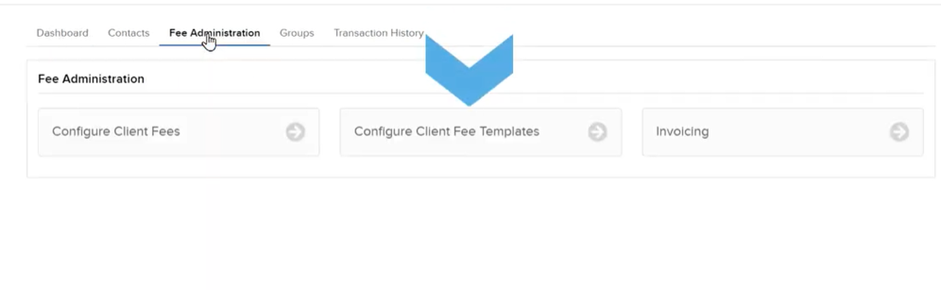
In this section, IBs will learn how to configure markups/markdowns on Interactive Broker’s interest rates and borrow fee rates. First, IBs need to go to the Fee Administration page and select Configure Client Fee Templates. Then, click in the plus sign in the right corner to create a new template and change its name.
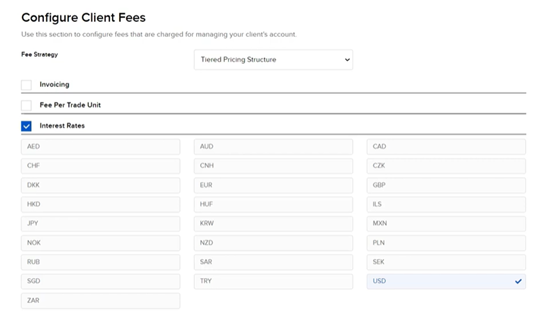
The process of configuring interest rates involves selecting the desired currencies, with USD used as an example. Brokers can choose multiple currencies simultaneously.
Markups and markdowns are entered as percentages, with specific fields for:
– Pay Client No Credit Interest
– Credit Markdown
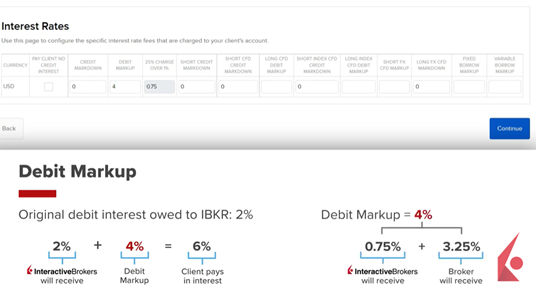
– Debit Markup
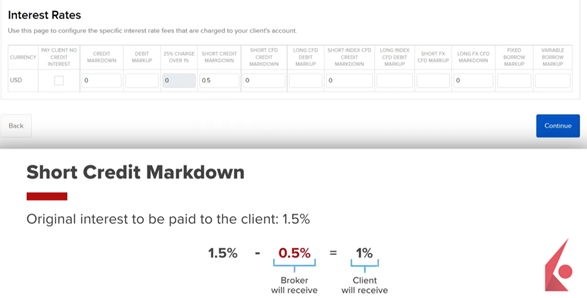
– Short Credit Markdown
– Fixed or Variable Borrow Fee Markups
Pay Client No Credit Interest: If selected, all credit and short proceeds credit interest will go to the broker, and the client receives nothing. This selection disables the markdown credit interest options.
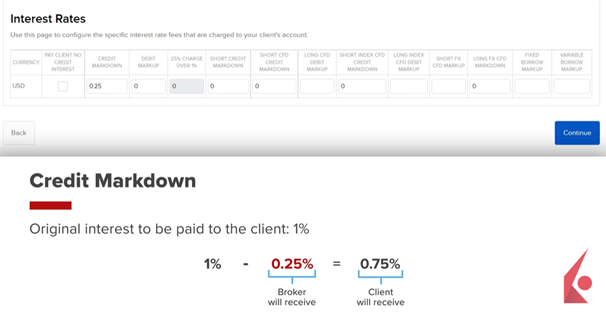
Credit Markdown: This reduces the credit interest paid to the client, with the difference going to the broker. For example, with a 1% credit interest, specifying a 0.25% markdown means the client gets 0.75%, and the broker gets 0.25%. Clients are not charged negative interest, so if the markdown exceeds the available rate, the client receives no interest.
Debit Markup: This increases the debit interest rate, up to a maximum of 5%. For instance, if the base rate is 2%, a 0.5% markup means the client pays 2.5% total, with 0.5% going to the broker. If the markup exceeds 1%, IBKR collects 25% of the amount over 1%. For example, a 4% markup results in a total of 6% debit interest for the client, with IBKR receiving 2.75% and the broker 3.25%.
The Short Credit Markdown operates similarly to a regular credit markdown but applies to the interest on short proceeds (cash collateral from shorting stocks). A percentage of this interest is subtracted and paid to the broker instead of the client. For instance, if the credit interest is 1.5% and the markdown is 0.5%, the client receives 1% and the broker 0.5%.
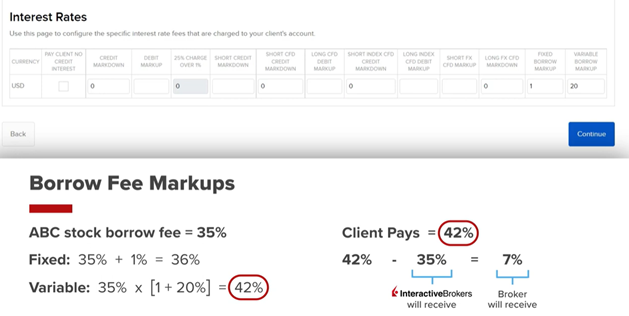
Brokers can also set separate interest schedules for CFDs and Index CFDs and can charge markups on stock borrow rates. There are two types of borrow fee markups: fixed and variable. Fixed Borrow Fee Markup adds a fixed percentage (0-1%) to the borrow rate, while Variable Borrow Fee Markup multiplies the borrow rate by (1 + Variable Markup Percentage), with values ranging from 0-25%. The system applies the markup that results in a higher total amount.
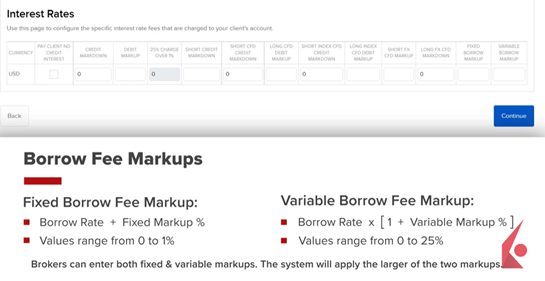
For example, with a borrow fee rate of 35%, a Fixed Borrow Markup of 1% results in a 36% total fee, whereas a Variable Borrow Markup of 20% results in a 42% total fee. The higher variable rate is applied, and the broker captures the difference above the original borrow fee.